
SAFETY TIPS
Biking Safety Basics
What are the top 5 bike safety tips?
1) Follow the rules of the road – Ride with traffic, obey all regulatory signs and signals, act like a car, and use the rightmost lane going in your direction.
2) Be predictable – Use hand and arm signals for stopping, merging, or turning; ride in a straight line, stay about a car-door’s width from parked cars; avoid sidewalks (especially in downtown); if you must ride on one, cross driveways and intersections at walking pace and watch for vehicles.
3) Be visible – Ride where drivers can see you; wear bright clothing during the day and light or reflective gear at night; always use a bright headlight, tail light, and reflectors when riding at night (required by law).
4) Be alert – Stay vigilant at intersections, make eye contact with drivers, assume they may not see you until you're sure; be aware of your surroundings and ready to react; learn proper braking and turning techniques; avoid hazards like storm drains, slippery surfaces, gravel, and ice; cross railroad tracks at right angles; don’t listen to music or use your phone while riding.
5) Ride with proper equipment – Wear a helmet; check that brakes and wheels are secure and functioning; use a solid lock to secure the frame and front wheel to a fixed object.
How should I navigate intersections safely?
Never ride against traffic
Always ride on the right side of the road and follow the appropriate travel lane for your turn. If uncomfortable, walk your bike on the sidewalk or crosswalk at walking speed.
Going straight?
Make eye contact with drivers, and even wave to ensure you're seen. Before entering the intersection, check:
Traffic behind you — if clear, move left in the lane for better visibility.
Left-turning vehicles ahead — position yourself visibly to the left.
Right-turning vehicles from the right — again, be visible and use a light at night.
Turning left?
Vehicle-style left turn: Look back, signal, move into the left lane, and turn from the left or dedicated left-turn lane.
Pedestrian-style left turn: Go to the far side of the intersection, then cross with pedestrians after the signal changes.
Signal Your Turns
Bicyclists should use hand signals as shown. Practice dropping one hand from the handlebars while steering straight. The law provides that you do not have to signal if you need to use your hands to steer or brake. Utah Statute 41-6a-1109.
What if I’m involved in a crash?
Make sure you are OK; go to the hospital if in doubt.
Call the police (911) and get a police report at the scene.
Write down the details of the incident. If you have a camera, take photos. Get names and contact information from any witnesses.
If you are hurt, you can file a Personal Injury Protection (PIP) claim, with either your auto insurance or the car driver’s insurance (regardless of who is at fault). Auto insurance covers you for certain types of crashes on your bike. You may also consider hiring a personal attorney.
What about gear and equipment?
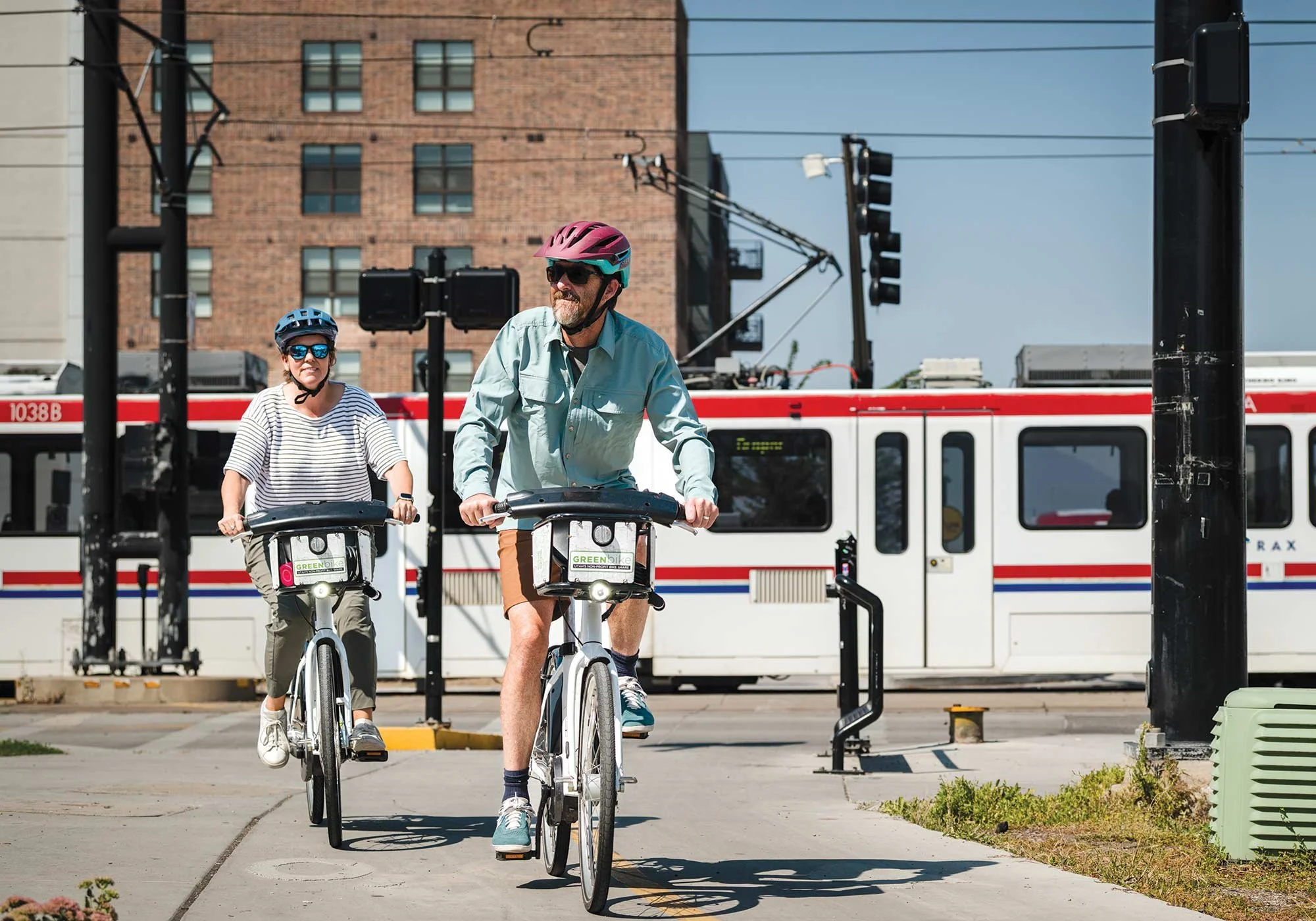
Wearing a bicycle helmet is smart, whether you ride in traffic or on a trail. Helmets are required on most organized bicycle rides, but are not required by law. When you buy a helmet, look inside to make sure it has a sticker from the Consumer Products Safety Council (CPSC).
Check your helmet fit
Bicyclists of all ages can make sure a helmet fits by doing the Eyes, Ears, Mouth test:
Eyes: Start by making sure the helmet fits comfortably on your head, but not too loosely. Place the helmet on your head level with your eyebrows.
Ears: Adjust the straps to form a Y under each earlobe. Poorly-adjusted straps are a common cause of the helmet sitting too far back on the head.
Mouth: Tighten the chinstrap so you can just slip two fingers under the helmet. When you open your mouth wide, you should feel your helmet tighten on the top of your head.
The helmet should sit level on your head and be snug. After a crash or any impact that affects your helmet, visible or not, replace it immediately.